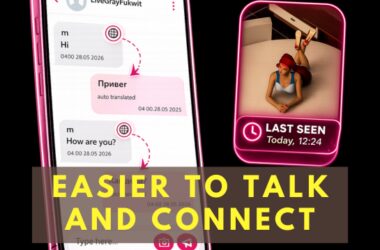
People do not always come to sex simulators because they are lonely.
Sometimes they come because they are curious. Sometimes because dating apps feel like unpaid work. Sometimes because they are in a relationship and still have desires they do not know how to say out loud. And sometimes because being wanted by an avatar on a screen still feels better than not being wanted at all.
Most adults want roughly the same things: stable relationships, a comfortable life, and people they can rely on.
But real life is rarely that simple.
People feel lonely even when they are constantly online. Some are in happy relationships but still have fantasies they never talk about. Others are tired of swiping, texting, waiting, ghosting, and pretending that “so what do you do?” is a romantic question.
This is where sex simulators found their audience.
Not because people stopped wanting real relationships. And not because virtual worlds can fully replace intimacy. But because desire, curiosity, and loneliness do not always fit neatly into everyday life — and the internet has always been a place where people explore the parts of themselves they do not easily share elsewhere.
The Secret Rooms of Adult Life
Sex simulators are often talked about as if they exist only for lonely people. That is too simple, and frankly, too lazy.
Yes, loneliness is part of the story. A large one. The World Health Organization has described loneliness and social isolation as a global public health issue, with around one in six people worldwide affected by loneliness. Among adolescents and young adults, the figure is even higher: roughly one in five.
And that makes a certain brutal sense. We live in an age of endless contact and very little closeness. A person can spend all day online, answer messages, send memes, react to stories, sit in group chats, and still end the night feeling like nobody actually touched the real part of them.
For some players, an online sex simulator is not a replacement for love. It is a place where attention happens. A place where someone looks back. A place where flirting does not require a dating-app profile bio, a dinner reservation, or the emotional stamina to explain your entire personality in six messages.
Yes, you still create a character and fill out a profile of your own. But it often feels less like marketing yourself and more like building a version of yourself that others can discover naturally.
But loneliness is not the only doorway in.
Some players are in relationships. Some are married. Some are not unhappy at all, at least not in the dramatic sense. They have partners, routines, shared bills, shared friends, maybe even real affection.
But desire is not always equal inside a couple. One person wants to try something. The other does not. One person has a fantasy. The other finds it strange. One person misses the electricity of being pursued. The other is tired, busy, or simply not wired that way.
So the fantasy goes somewhere else.
Not always into an affair. Sometimes into a character. A room. A chat. A virtual body. A flirtation that feels dangerous precisely because it is not quite real.
This is where adult virtual worlds become interesting. They are not just “porn with buttons.” They are social spaces for the parts of adult life that often stay unsaid.
The Fake Affair That Feels Real Enough
Digital life has created a strange emotional category: the almost-affair.
It is not a hotel room. It is not lipstick on a collar. It is not necessarily a betrayal in the old cinematic sense. But it can still have heat, secrecy, attention, and the private thrill of being someone else for a while.
In a sex simulator, flirtation can become theater. The avatar is a costume. The room is a stage. The chat is a script written in real time by two people who are pretending, performing, and sometimes revealing more than they planned.
For one couple, that might be harmless fantasy. For another, it might cross a line. The interesting thing is not deciding, from the outside, which couple is right. The interesting thing is that these spaces expose how many people are living with desires they do not know how to bring home.
A virtual flirtation can be a game. It can be a rehearsal. It can be a secret. It can be emotional cheating. It can be all of those things before midnight.
And maybe that is why sex simulators make people nervous. They do not just sell adult content. They ask an uncomfortable question: how much of intimacy is the body, and how much of it is being seen?
Why Fantasies Move Into Avatars
An avatar is not just a digital doll. In adult virtual worlds, it becomes a translator.
It can say: this is how I want to be looked at.
It can say: this is the version of me I do not dare to wear outside.
It can say: I want to be softer, bolder, prettier, stranger, more dominant, more desired, less responsible.
But the avatar is only part of the story. The profile matters too.
In many adult virtual worlds, people fill out pages of information about themselves: interests, boundaries, fantasies, relationship preferences, roleplay styles, things they are curious about, things they never want to do, things they secretly hope someone will ask about.
It is a strange kind of honesty.
People will write down desires, rules, and personal details they would never put on Facebook and might never admit to coworkers, friends, or even a spouse.
A profile becomes a controlled confession. Not necessarily because someone wants to deceive anyone, but because the virtual world creates a context where those conversations feel possible. The things that sound awkward, embarrassing, or impossible in everyday life suddenly become profile fields, preferences, and conversation starters.
Real life gives us bodies that come with history. Age, shame, memory, habits, insecurity, other people’s opinions. It also gives us social roles that can be difficult to escape. A virtual body and profile offer something more flexible. Not better, not more “real,” but more editable.
That is part of the appeal of sex simulators. They allow fantasy to become spatial and social. Desire is no longer just watched on a screen; it is entered. There are rooms, outfits, gestures, messages, gifts, profiles, private spaces, public spaces, and other players.
Sex becomes less like a scene and more like a social mechanic.
This is the key difference between adult content and adult worlds.
Porn is something you watch.
A sex simulator is a space you actively participate in rather than simply observe.
An adult virtual world is somewhere you can be watched back.
That last part changes everything.
Why People Like It
At their best, sex simulators can offer something surprisingly human: a safer distance from desire.
People can experiment without immediately turning their lives upside down. They can flirt without downloading five dating apps. They can test a fantasy before deciding whether it belongs in real life. They can feel wanted without exposing their legal name, their kitchen, their insecurities, or the fact that they have laundry in the chair.
For lonely people, that can mean contact.
For shy people, rehearsal.
For people in long relationships, novelty.
For curious people, play.
For roleplayers, a stage.
For everyone else, maybe just one evening of being looked at differently.
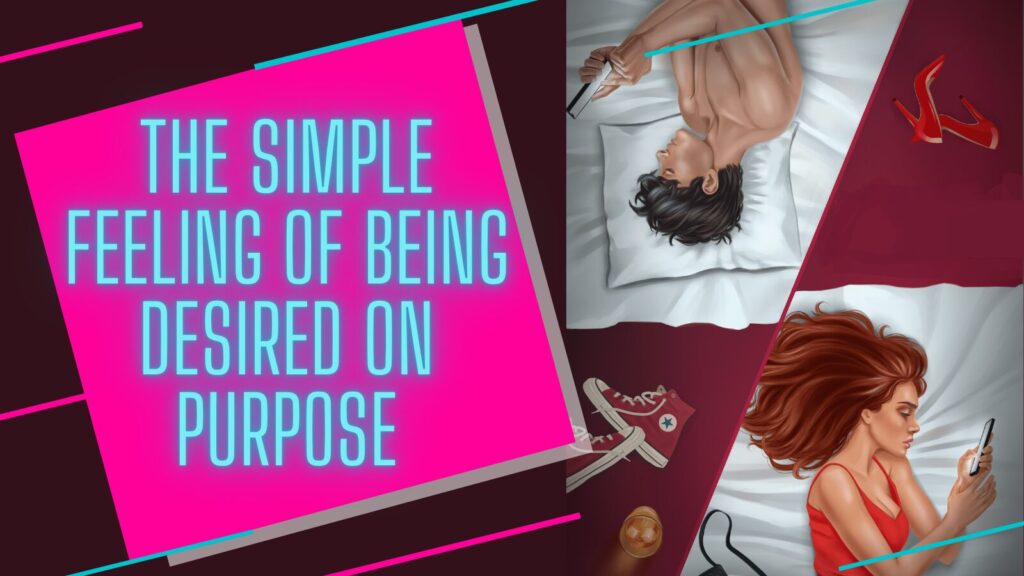
The best sex simulator games do not necessarily replace real intimacy. Sometimes they reveal what is missing from it: attention, risk, tenderness, power, surrender, beauty, play, or the simple feeling of being desired on purpose.
There is something almost tender in that, even when the context is explicit. Humans have always built masks for desire. The internet simply made the masks interactive.
When Fantasy Becomes Escape
Of course, fantasy is not automatically harmless just because it has pixels.
A virtual affair can still hurt. A secret can still become a betrayal. A game can become the place someone goes instead of having the conversation they are avoiding. A person can become so used to editable desire that real people start to feel inconvenient by comparison.
The danger is not that someone opens a sex simulator. The danger is that they find a language for their desire there and never learn how to speak it anywhere else.
And that is where adult worlds have a responsibility that simple adult content does not. Once a game becomes social, it also becomes a place where boundaries, privacy, consent, and emotional reality matter.
You are no longer just managing content. You are managing people.
Which brings us, inevitably, to Steam.
Steam: Adult Games Are Allowed, But Please Do Not Be Too Adult
Steam officially allows some adult games. There is a Mature Content Survey. There are adult-content settings. There is a review process. On paper, it sounds simple: tell Steam what is in your game, mark the adult content correctly, and wait for approval.
In reality, it is not that simple.
Adult-only sexual content usually needs extra review. Developers must describe mature content clearly and accurately. Steam may review the store page and the game build together. Valve also says it does not currently want to ship live-generated AI adult-only sexual content, because the legal and customer risks are too high.
So yes, adult games can exist on Steam. But that does not mean every adult game is safe there.
There is a big difference between a mainstream game with a few erotic scenes and a game where sex is the main point. A fantasy RPG with optional sexual content may pass. A visual novel with adult scenes may pass. But a social adult world, where flirtation, avatars, sex, and fantasy are the core experience, can be a much harder sell.
Yareel ran into this exact problem. The game was not trying to hide what it was. It was not a regular game with a little erotic content added on top. It was an adult virtual world built around flirtation, sexuality, avatars, and social fantasy. For Steam, that was too much.
Not “too adult” in theory.
Too adult in practice.
And Yareel is not the only example. Steam has been struggling with adult games for years.
In 2018, several adult visual novels were caught in a wave of takedown and censorship warnings. One of the most visible cases was HuniePop. The developer said on X/Twitter that Valve had emailed them saying the game violated Steam’s rules on pornographic content and would be removed unless it was updated.
- IMPORTANT NOTICE -
— Kyu Sugardust (@HunieKyu) May 17, 2018
I've received an e-mail from Valve stating that HuniePop violates the rules & guidelines for pornographic content on Steam and will be removed from the store unless the game is updated to remove said content.
That moment became one of the early signs that adult developers could not fully relax on Steam. Even if a game was already on the platform, the rules could shift around it.
Then came other cases that kept adult developers nervous.
In 2019, Taimanin Asagi reportedly had Steam approval reversed after its store pages had already been approved. In 2020, Bokuten: Why I Became an Angel was removed from Steam months after release and later returned. In 2021, Super Seducer 3 was banned and removed from Steam. Its developer, Richard La Ruina, wrote that Steam would not allow the game to be released “in any form.”
Steam have BANNED and removed Super Seducer 3 from the store. They will not allow it to be released in any form.
— Richard La Ruina (@RichardGambler) March 20, 2021
Our page is gone and 61,700 wish lists are gone.
Prior to this they told me expect either “approval or feedback”.
We repeatedly said we’d do whatever they needed pic.twitter.com/hVuDcvzL2n
These games were very different from each other. But together they taught adult developers the same lesson: approval is not always final, rules are not always easy to read, and “adult content is allowed” does not mean “your adult game is safe.”
By 2025, the problem became even bigger. It was no longer just about Steam deciding what Steam wanted to sell. Payment processors, card networks, and banks became part of the story.
Steam updated its rules to ban content that may violate the standards of its payment processors, card networks, banks, or internet providers, especially certain kinds of adult-only content. Around the same time, itch.io announced that it had come under scrutiny from payment processors because of NSFW content. The platform temporarily deindexed adult NSFW pages from search and browsing while it reviewed the situation.
This changed the conversation. The question was no longer only: “What kind of adult content does Steam allow?” The question became: “What kind of adult content will payment processors tolerate?”
That is a very different problem.
Payment companies do not need to ban a game directly. They only need to make the platform afraid of losing payment access. And once that happens, the platform becomes much more careful. Sometimes too careful.
This is why adult-game developers often feel like they are playing by rules they cannot see. The storefront has one set of rules. The payment processor has another. Regional laws add more. Public backlash adds pressure. And somewhere in the middle, a game can disappear, be rejected, or become impossible to sell.
A Slightly Bitter Guide to What Platforms Prefer
Adult content as a bonus? Manageable.
Adult content as the entire reason people came? Complicated.
Sex as one scene after five hours of story? Maybe.
Sex as the main social mechanic? Suddenly everyone gets nervous.
Violence as core gameplay? That is a genre.
Desire as core gameplay? That is a meeting with legal, payments, policy, and PR.
This is not just hypocrisy, although there is plenty of that. It is infrastructure. Sex touches age ratings, regional laws, public relations, banking relationships, credit card networks, app store policies, and the deep corporate fear of being mentioned in the wrong headline.
The most powerful character in the modern sex simulator may not be the perfect avatar in the private room. It may be the payment processor who never logs in but somehow decides whether the room is allowed to exist.
Why the Adult Internet Pretends to Be Innocent
The adult internet is not small. It is not new. It is not some strange basement under the respectable web. It is one of the forces that built online culture, streaming technology, payment systems, privacy tools, and endless forms of digital performance.
And yet platforms still behave as if adult desire is an embarrassing exception.
They want adult users, but not adult risk.
They want traffic, but not scandal.
They want transactions, but not chargeback panic.
They want freedom, but only the kind that does not make Mastercard sad.
So we get euphemisms. Mature content. Suggestive themes. Adult-only. Restricted visibility. Sensitive material. Words designed to make sex sound like a paperwork problem.
Maybe that is why sex simulators are culturally useful, even when they are messy. They make the hidden thing visible. They show that people are not only looking for content. They are looking for response. For performance. For fantasy. For attention. For an alternate self. For a room where the rules are different.
Sometimes that is lonely. Sometimes it is erotic. Sometimes it is sad. Sometimes it is funny. Often, it is very human.
Where This Is Going

Sex simulators are not going away. If anything, they are likely to become more social, more customizable, more private, and more difficult for mainstream platforms to categorize.
AI will make fantasies more responsive and also more frightening to regulators. Avatars will become more expressive. Adult virtual worlds will move closer to social networks. Players will want not just scenes, but presence: rooms, rituals, relationships, memory, status, and the feeling that someone is waiting for them.
At the same time, mainstream platforms may become more cautious. More filters. More verification. More regional restrictions. More vague rules written in the language of safety and enforced in the language of risk.
The result may be a split adult internet: sanitized storefronts on one side, independent ecosystems on the other. The official internet will keep pretending to be innocent. The real internet will continue doing what it has always done: building secret rooms for private wants.
The Mirror, Not the Replacement
Sex simulators do not prove that real intimacy is dead. They prove that real intimacy has shortages.
A shortage of novelty.
A shortage of courage.
A shortage of language.
A shortage of places where people can admit what they want without immediately becoming the worst version of themselves in someone else’s eyes.
Virtual sex can be escape. It can be cheating. It can be play. It can be practice. It can be loneliness wearing better clothes. It can be a rehearsal for honesty.
Sometimes it is all of that at once.
And maybe that is why the adult internet keeps pretending to be innocent. Because admitting the truth would mean admitting that people do not come online only to watch.
They come to be wanted.